Get More Customers
Franchise Local SEO: How to Rank Every Branch, Not Just Head Office
Jan Rohweder · Founder of OnEveryMap · CEO & Founder of Marketing Bear
Insights from Jan, founder of OnEveryMap and CEO & founder of Marketing Bear.
Most franchisors recognise the pattern the moment they look closely. One branch is doing beautifully on Google Maps: complete profile, strong reviews, top of the local results. The other thirty are somewhere between average and invisible. That gap is what this article is about.
Ranking one store well is a marketing win. Ranking every store well, consistently, is an operations discipline, and it is what separates a brand that happens to have one good location from a brand that is genuinely findable everywhere it trades. This is a practical guide to franchise local SEO per branch and at network scale, without it falling apart. It is a companion to our fuller Google Business Profile for franchises guide; here I zoom into the branch-level mechanics.
What is franchise SEO, and what is franchise local SEO?
For a multi-location brand, franchise SEO is mostly local SEO. You are not really trying to make head office rank for the brand name (you probably already do). You are trying to make each individual branch show up when someone nearby searches for what that branch sells: "coffee near me," "car repair near me," "clinic open now." Every branch competes in its own local map results, in its own neighbourhood.
So franchise local SEO is the work of making each location visible and trusted for the searches customers make near it, done the same way across the whole network. You will hear it called local performance optimization, local visibility optimization, or digital footprint optimization. The label does not matter; the goal is getting the right customer to the right branch.
The per-branch fundamentals that move local rankings
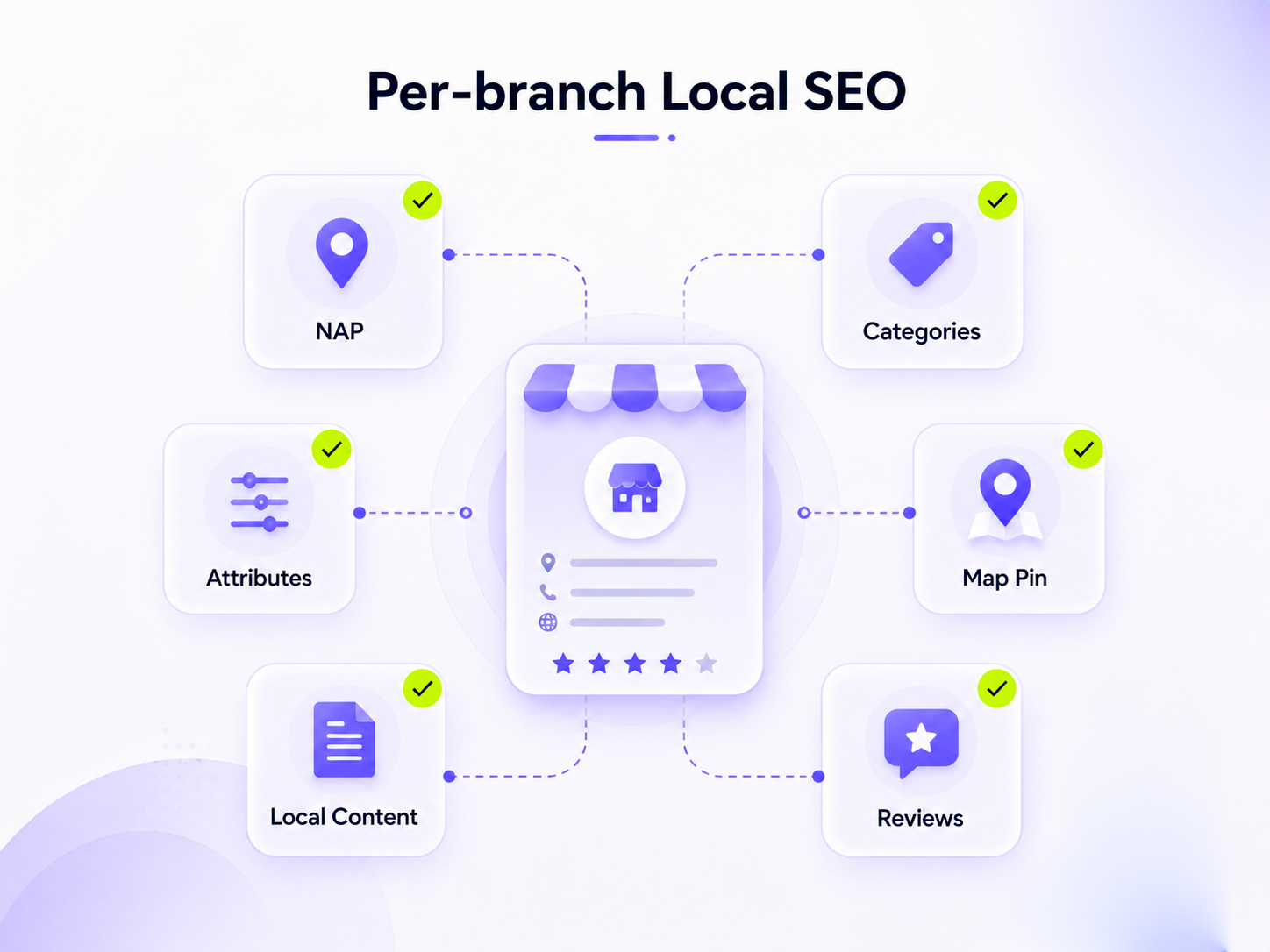
Before any network-scale cleverness, each branch needs its fundamentals right. These are the pieces Google reads to decide who appears in the local results, and the pieces that quietly break as a network grows.
- Accurate, consistent NAP. Name, address and phone number must be exact and identical everywhere they appear. A branch listed as "Rd." one place and "Road" another, or with an old phone number lingering somewhere, introduces the doubt that pushes a location down. Consistency here is a ranking input, not a nice-to-have.
- The right primary category. The primary category is one of the strongest levers over which searches a branch appears for. Pick the category that describes what the branch is at its core, then add secondary categories for the other real services. Getting this wrong is a common reason a branch is invisible for the exact thing it sells.
- Attributes. The smaller checkboxes ("dine-in," "delivery," "wheelchair accessible," service options) help you match more specific searches and answer what a customer asks before choosing you.
- The correct map pin. The marker has to sit on the actual front door, not a rooftop, a car park, or the wrong side of a soi. A misplaced pin sends "Get Directions" traffic to the wrong place, and every customer who ends up lost may not come back.
- Local content. Photos of this branch, posts about this location, answered questions. A profile specific to the location earns more trust than a template shared across the chain.
- Reviews. Reviews are among the strongest local ranking and trust signals there are, and they are earned branch by branch. A network where a few flagship stores have hundreds of reviews and the rest have three ranks unevenly.
None of this is exotic. The difficulty is never doing it once; it is doing it identically across 40, 80 or 400 branches, and keeping it that way as stores move, change hours, and change owners.
Which franchise categories win or lose the most
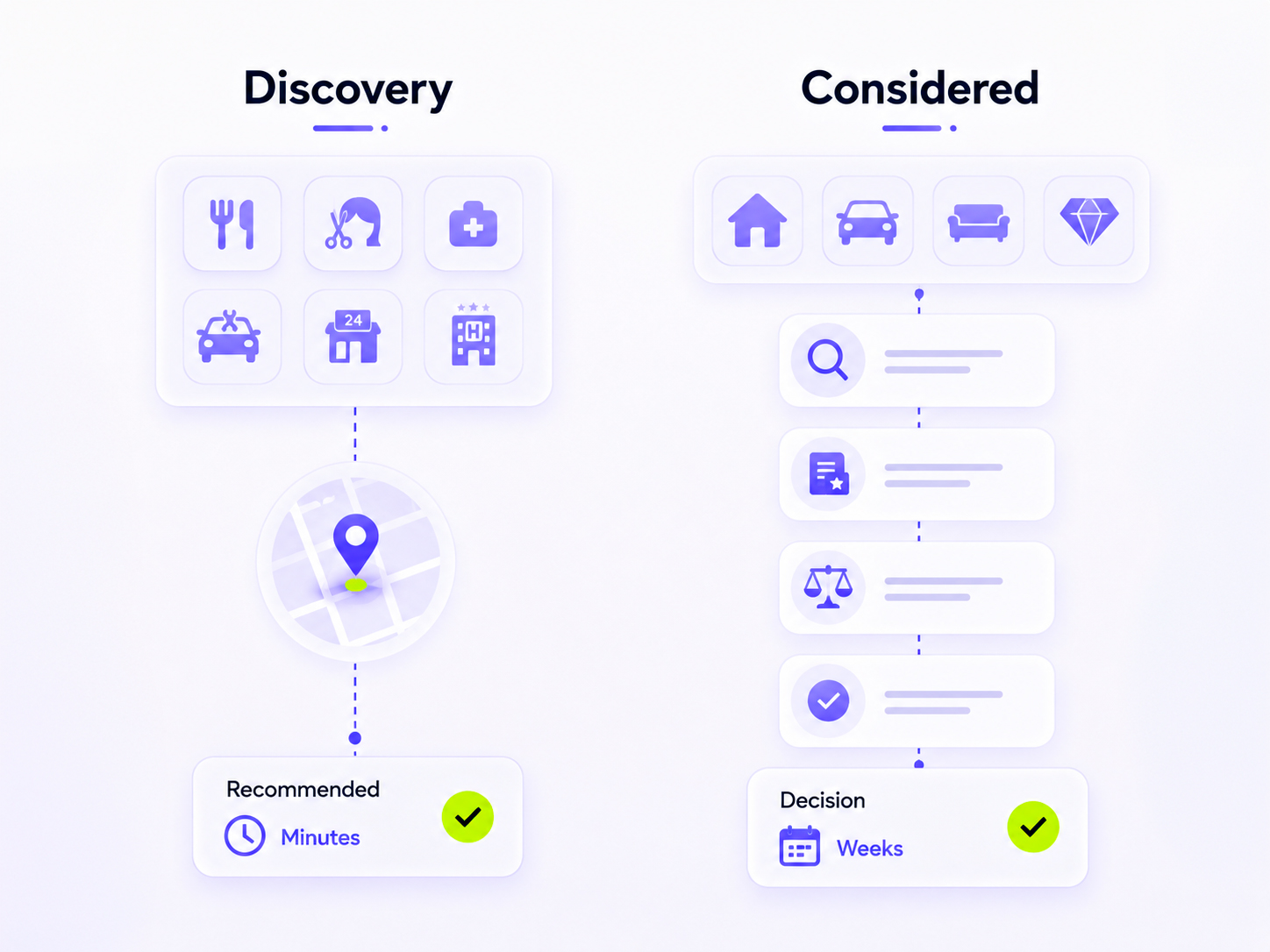
Branch-level local SEO pays off most for businesses that rely on being discovered in the moment.
Think about anything that does not involve a long, considered decision: food and drink, clothes, health items you do not want to wait for, anything to do with your car when something breaks down, a quick getaway or a hotel stay. Any situation where a customer does not want to spend weeks researching the "right" option; they want a good option, nearby, now.
If a driver's engine light comes on in a province they do not know, they open Google Maps and pick a nearby garage they can trust in the next ten minutes. If your branch is not there, or looks abandoned, it was never in the running. Most Thai franchise networks live squarely in these discovery-reliant categories (food, drinks, beauty, health, auto, convenience, quick stays), which is exactly why branch-level local SEO is worth the operational effort.
One strong store vs a consistent network
Here is where most franchise local SEO efforts quietly come undone. The instinct is to hand each branch's local presence to its own manager or franchisee, because they are closest to the location. It feels natural, and it is a mistake.
Hand the work to a large, disconnected group of owners and each does it their own way: different categories, photo styles, tone, and levels of care. Since consistency is the single most important ingredient for both customer trust and how confidently search and AI systems can recommend you, a network where every branch reads differently is working against itself. Customers do not know or care which branch is a franchise and which is company-owned; they see the brand, and expect the branch they find today to match the one they loved last month. When it does not, doubt creeps in, and the competitor next door starts to look safer.
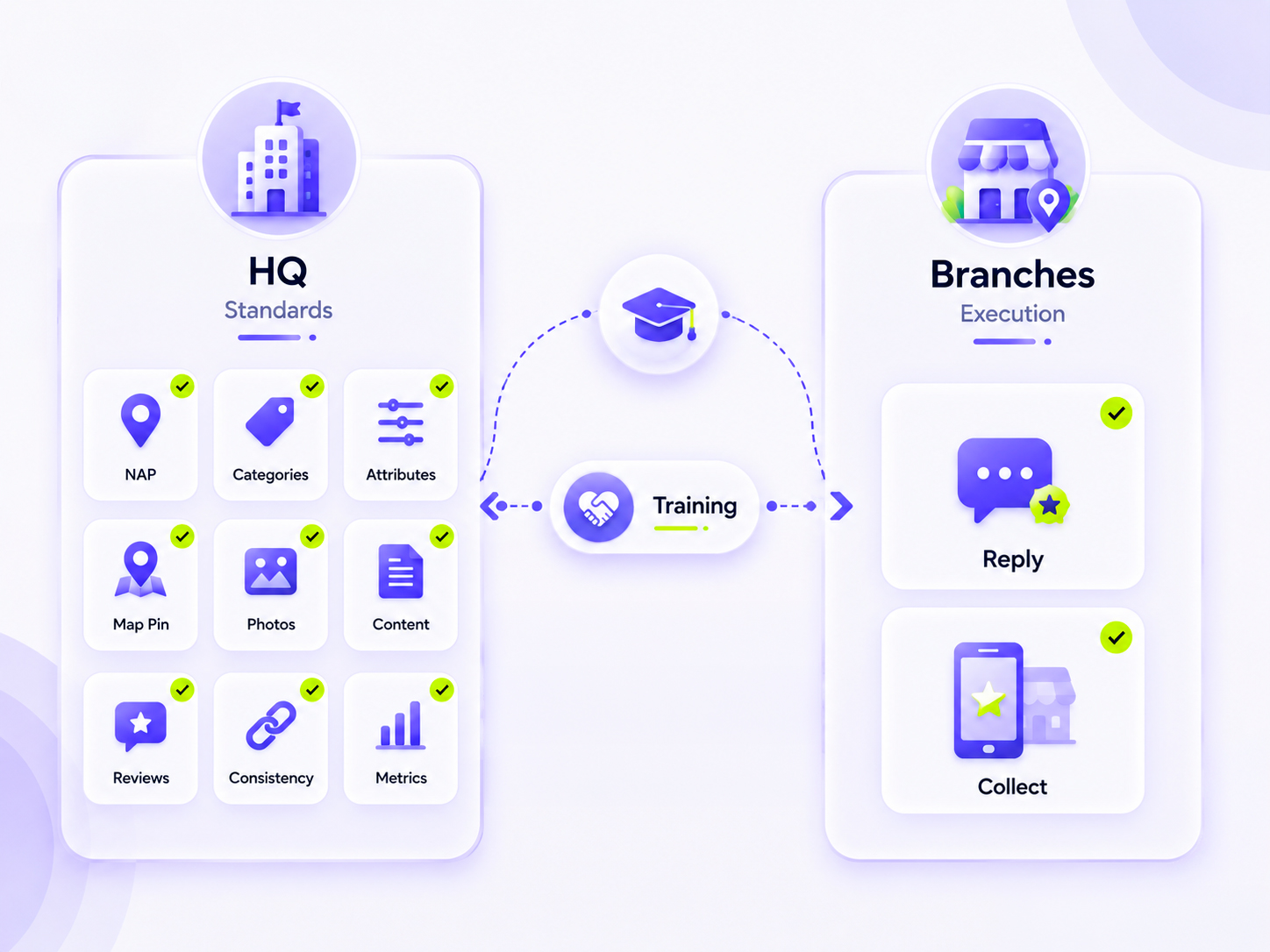
So my hard recommendation is the same one I make in the pillar: the branch-level local SEO programme should be led and steered by headquarters or the franchisor. Only the pieces that genuinely need local knowledge belong to the branch: replying to negative or tricky reviews, where only the person who was there knows what happened, and collecting reviews on the floor. Even those are best backed by training.
How to keep it from falling apart at scale
The difference between one strong store and a consistent network comes down to three habits.
First, one source of truth. Every branch's core data (NAP, categories, hours, attributes) should live in one place the whole network follows, not in forty separate heads. That is what makes the fundamentals survive a store moving or changing owner.
Second, consistency beyond Google. The same accurate information should appear wherever the internet reads about each branch, because search engines and AI tools trust a location more when every source agrees. Our free audit checks each brand's presence across up to 14 of the platforms that matter. (The deeper "why" behind cross-directory consistency, and how it drives AI recommendations, is in the pillar guide.)
Third, measure per branch, not per brand. Most franchisors look at the network in aggregate and never see that a handful of branches are dragging the average down. Knowing which specific locations are invisible, losing reviews, or pinned in the wrong place is what lets HQ fix the network one branch at a time.
None of this is guaranteed; every network starts from a different place. But when a brand starts from scratch and takes the cleanup and consistency seriously, an uplift in visibility of roughly 50–100% within 2–3 months of implementation is realistic. If groundwork already existed, the jump is smaller. I have seen this hold for small chains of three or four locations and for much larger Thai networks with hundreds of branches. There is a public proof point too: OnEveryMap's case study on the Michelin tyre and auto-service retailer network shows that keeping listings actively managed and engaging with reviews drove 25% more local leads, 29% more calls, and 21% more "Get Directions" requests across the stores.

In our own 2026 research into Thai franchise brands, that gap showed in the data: 124 were effectively invisible when we checked their Google Maps footprint, and 2,151 individual locations had no website link on their profile (measured July 2026). Those are branches leaving discovery, and money, on the table for want of fundamentals done consistently.
Frequently asked questions
What is franchise SEO?
For a multi-location brand, franchise SEO is mostly local SEO applied across a whole network: making each branch findable for the searches customers make near it, rather than just making head office rank for the brand name.
What is franchise local SEO?
It is the branch-level side of franchise SEO: getting each location's fundamentals right (accurate NAP, correct primary and secondary categories, attributes, an accurate map pin, local content and reviews) and keeping them consistent so every branch competes in its own local results. It is also called local performance optimization or digital footprint optimization.
What is a franchise SEO strategy?
At scale it is less about clever tactics and more about governance: HQ sets one standard for every branch's data, steers the work centrally, and hands only the genuinely local pieces (negative-review replies, on-the-floor review collection) to branches. Then measure every branch individually.
Do I need a franchise SEO company, consultant, or service?
You need the discipline more than a vendor. A small chain can run the fundamentals in-house if someone owns consistency across every branch. Franchisors bring in a franchise SEO service for scale: claiming, standardising, deduplicating and measuring hundreds of locations by hand is where it usually breaks down.
How do I manage my business on Google Maps across many branches?
Centralise ownership of every branch's profile under HQ, standardise the core data into one source of truth, keep that information consistent everywhere else too, and measure each branch separately. Leave only negative-review handling and review collection to the branches, with training.
See where every branch stands
You cannot fix a network you have not measured. Our free Franchise Location Visibility Audit shows you exactly where each branch stands: which locations are invisible, where the fundamentals are broken, and how consistent your data is across the directories that matter. Get a free franchise audit.
For the full picture of managing profiles across a franchise, start with our Google Business Profile for franchises guide.
The strategy layer (designing a franchisee-marketing programme, getting field teams and store consultants on board, and making marketing part of a competitive franchise offer) is Marketing Bear's territory. See franchisor marketing consulting by Marketing Bear.