Learn the Basics
Location Data Consistency for Franchises: Why Every Branch Must Tell the Same Story
Jan Rohweder · Founder of OnEveryMap · CEO & Founder of Marketing Bear
Insights from Jan, founder of OnEveryMap and CEO & founder of Marketing Bear.
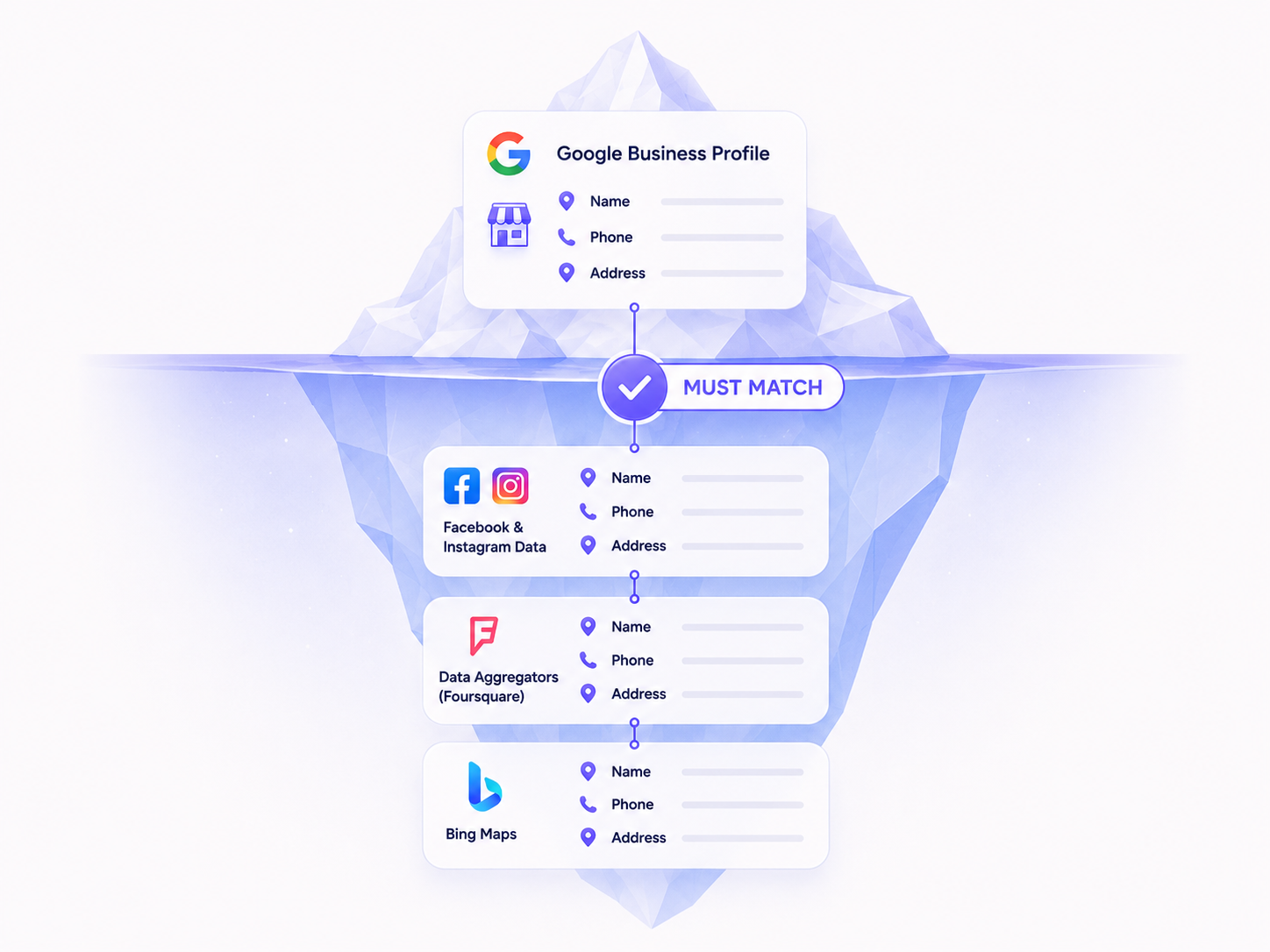
In the pillar guide to Google Business Profile for franchises, I made one point worth building on: your profile is only the tip of the iceberg. This article is about the mass beneath the waterline, the location data itself, and why every branch has to tell the exact same story about who you are, where you are, and how to reach you. If there is one rule for franchise location data management, it is this: consistency is king.
I learned it running the location-data and visibility work for Michelin's tyre and auto-service retail network (TyrePlus and other Michelin tyre retailers) across Thailand and Southeast Asia: hundreds of tyre shops and garages, dozens of owners, one brand that drivers expected to look and behave the same everywhere. When the data behind those locations drifts out of sync, it does quiet, measurable damage.
What franchise location data management actually means
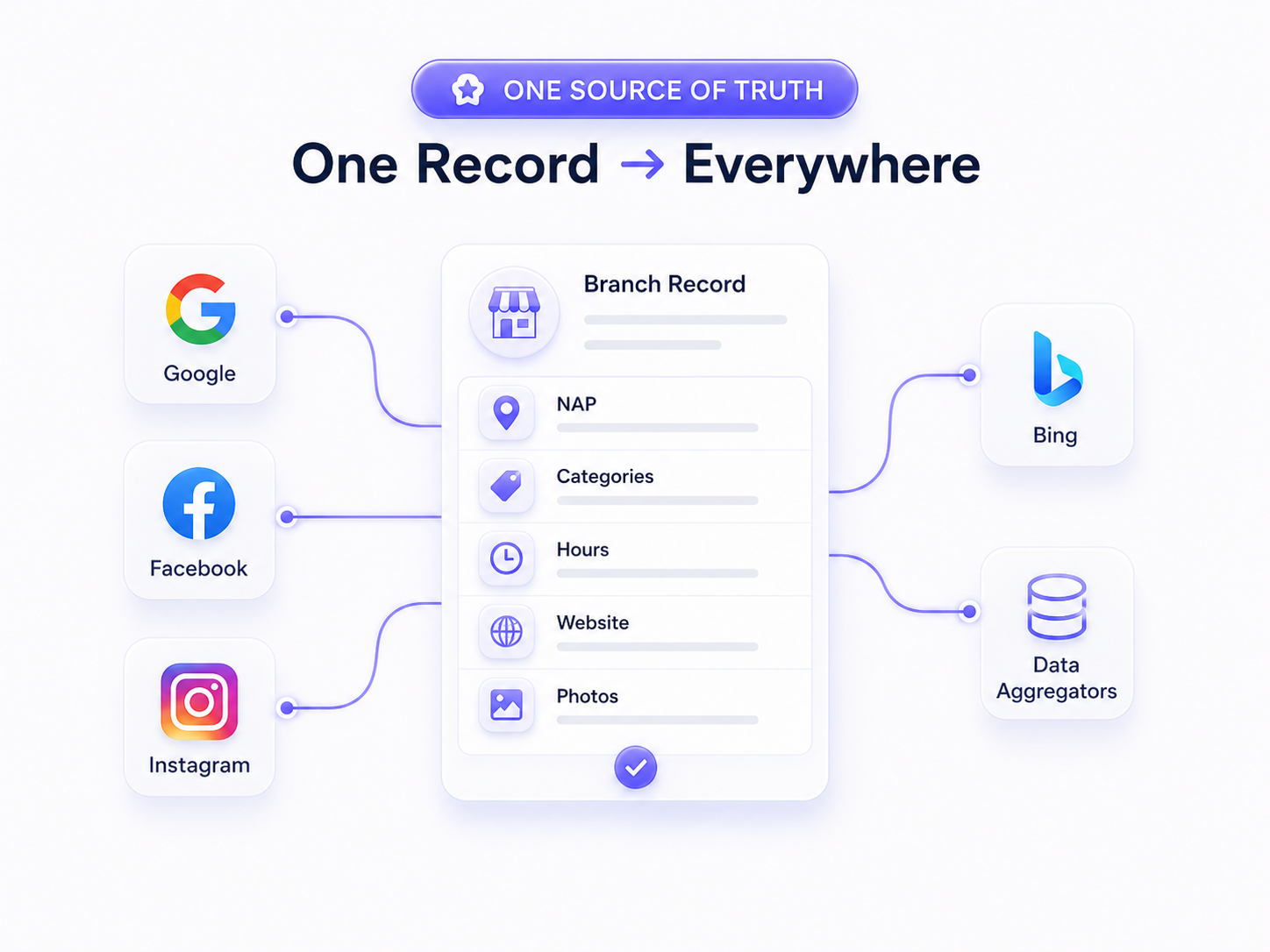
Franchise location data management is the ongoing discipline of keeping the core facts about every branch accurate, complete, and identical everywhere they appear online.
The foundation is your NAP: name, address, and phone number. But it does not stop there. Consistent location data also means:
- Categories that describe what each branch sells, kept the same across the network.
- Opening hours, including holiday and special hours, updated as they change.
- The website link on every profile, present and correct.
- Photos that meet one brand standard, not a different look at every location.
For a single café, keeping this straight is a light job. For a franchise with 40, 80, or 400 branches, it is an operations discipline, and the gaps show up fast. In our own 2026 research into Thai franchise brands, 2,151 individual locations had no website link on their profile at all (measured July 2026). A missing link is the simplest kind of inconsistency: a basic field, blank at scale, on locations that should all look complete.
Why inconsistent location data quietly costs you customers
Most customers do not know, and do not care, which of your branches is a franchise and which is company-owned. They see the brand, and to them, that is the brand. So when the data behind two branches disagrees, it does not read as "different owners." It reads as risk.
Picture a driver who had a great experience at one of your garages months ago. In another province, engine light on, they find another branch of the same brand on Maps and lean towards it, because they trust the name. But this profile looks nothing like the one they remember: a different address format, hours that seem wrong, a phone number that does not match. Doubt creeps in, and they glance at the competitor next door. Customers return to a brand because they expect the same experience as last time. When your record does not promise that consistently, you have reintroduced hesitation, and nobody ever emails to tell you it cost the sale.
Consistency is what makes AI confident enough to recommend you
Consistency matters for a second, fast-growing reason: AI tools. AI assistants surface the information they are most confident about. Ask one for the best place nearby for a type of food, or a garage that handles a specific repair, and it returns a short set of options it trusts most. That confidence comes partly from your Google Business Profile, and partly from whether every other directory says the same thing. Before an AI names you for a specific expertise, it wants to be sure that expertise is genuinely there, and the only way it can be sure is if every channel agrees.
Consistency is king for AI tools. And it is not only AI: Google itself checks the other directories to build trust in its own data. When it finds the same name, address, hours, and category confirmed elsewhere, that agreement lifts your visibility on Google. Inconsistency does the reverse, and doubt costs you rankings.
Where your data has to match: beyond Google
To make your record consistent, you have to know everywhere it lives. Beneath your Google Business Profile sit your Facebook and Instagram business data; the data aggregators that collect and resell location data (Foursquare is the clearest example, now feeding the companies building AI); and Bing Maps, which is used to verify data and feeds Microsoft Copilot. Your NAP, categories, hours, and website have to match across all of these, not just on Google. That wider mass is the iceberg the pillar guide describes, and it is what really decides how confidently the world can recommend you.
Duplicate and incorrect listings: the silent killer
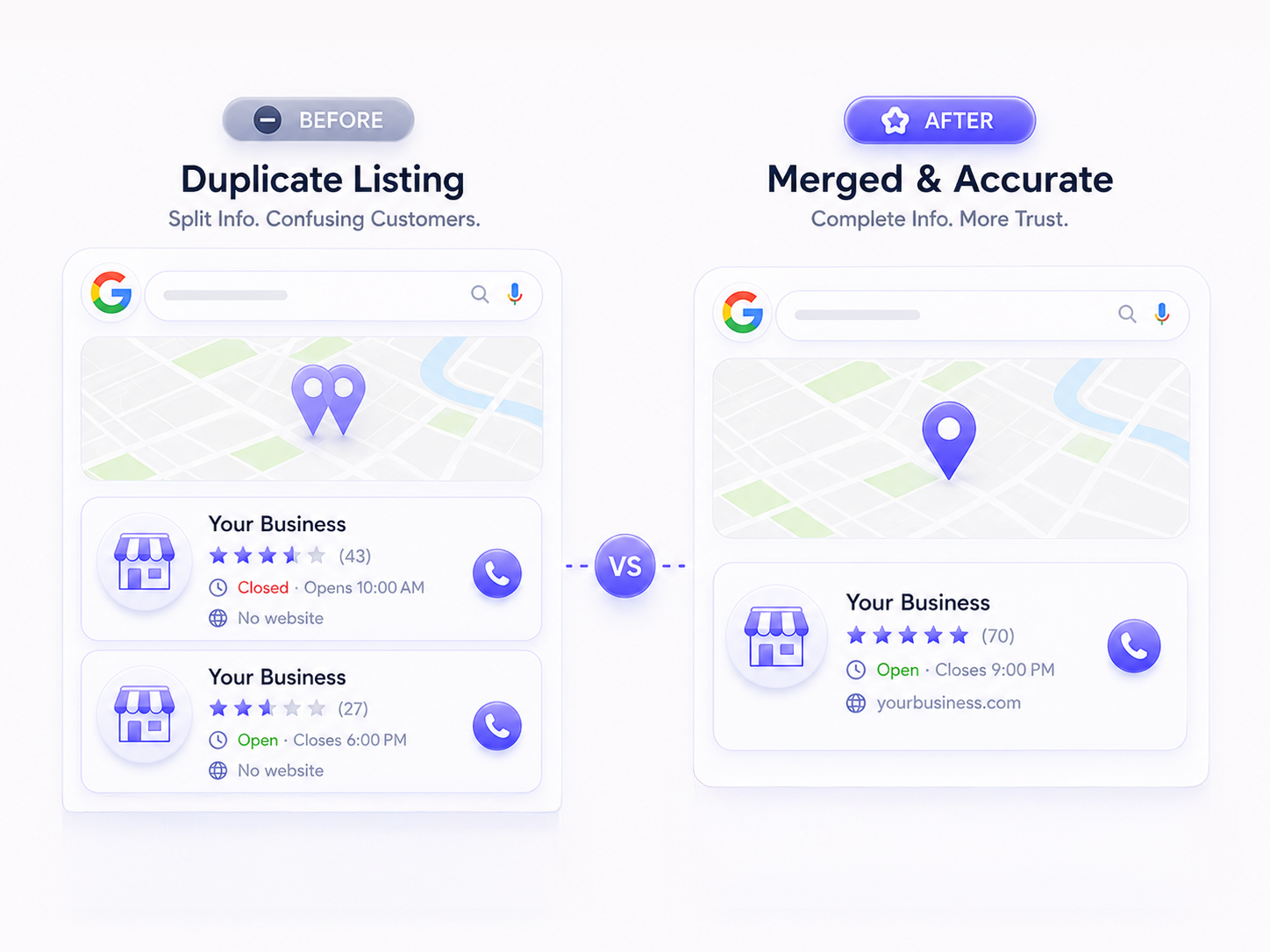
The most common form of inconsistency is not a typo. It is a duplicate listing: an old, unclaimed, or auto-generated pin for a branch that competes with the real one. Duplicates split your reviews across two records, confuse customers about which branch is real, and confuse Google about which data to trust. Incorrect listings are just as damaging: an old address after a branch moved, a disconnected phone number, hours that were never updated.
This is where invisibility begins. In our own 2026 research into Thai franchise brands, 124 were effectively invisible when we checked their Google Maps footprint (measured July 2026), with no findable locations at all. A network cannot be recommended, by a customer or by an AI tool, if its data does not add up. The fix for duplicates is deliberate: merge or delete the extra listings so each branch has exactly one clean, claimed record.
The cleanup: align every directory to one source of truth
When a brand decides to take its location data seriously, the work starts with a cleanup. It is more than "update the Google Business Profile." A proper cleanup usually means:
- Update and complete every Google Business Profile: accurate NAP, right categories, real photos, the website link present.
- Merge or delete duplicate listings wherever they exist across the network.
- Align the other directories (Facebook, Instagram, the data aggregators, Bing Maps) so the whole iceberg tells one story.
Done well, this is a bulk operation off a single source of truth, not 400 people editing 400 profiles their own way. Hours and holiday hours sync from one record, photos follow one standard, and categories are set once and held.
I cannot promise results, because every network starts from a different place. But when a brand starts with little done before and the cleanup is taken seriously, an uplift in visibility of roughly 50–100% within 2–3 months of implementation is a realistic expectation. Where groundwork already existed, the jump is smaller. There is a public proof point too: OnEveryMap's published case study on the Michelin tyre and auto-service retailer network shows that keeping listings actively managed and consistent drove 25% more total local leads, 29% more calls, and 21% more "Get Directions" requests.
Why consistency has to be steered by HQ
None of this survives if you hand every profile to a large, disconnected team of franchisees, each editing in their own way. Consistency is a network-level property: it only exists when someone owns the standard for the whole brand. So my hard recommendation is that location data management, and the whole local-visibility programme, should be led and steered by headquarters or the franchisor. Only the pieces that genuinely need local knowledge (replying to tricky reviews, collecting reviews on the floor) should sit with the branch. I cover the full ownership model in the Google Business Profile for franchises pillar guide.
Frequently asked questions
What is NAP consistency, and why does it matter for a franchise?
NAP is your name, address, and phone number. NAP consistency means those three facts read identically for a branch everywhere it appears online. It matters because both customers and search and AI systems treat mismatched data as a reason to doubt you: customers hesitate, and Google and AI tools lean toward a competitor whose data they trust more.
Should I delete duplicate Google listings for my branches?
You should resolve them, usually by merging duplicates into one claimed record, or removing the false ones. Duplicates split your reviews and confuse both customers and Google about which branch is real, which can push a location toward invisibility.
Who should manage location data across a franchise, HQ or the franchisee?
Headquarters or the franchisor should steer it, to protect one consistent brand identity across every branch. Only the pieces that need genuine local knowledge should sit with the branch, backed by training. The pillar guide covers the full ownership model.
Get your free Franchise Location Visibility Audit
If you want to know where your network actually stands, which branches are invisible, where duplicates are splitting your reviews, and how consistent your NAP is across the directories that matter, that is exactly what our free Franchise Location Visibility Audit shows you. The free audit checks your Google Maps footprint plus consistency across up to 14 of the platforms, directories, and AI assistants that decide discovery. Get a free franchise audit.
The strategy layer (designing a franchisee-marketing programme and making marketing part of a competitive franchise offer) is Marketing Bear's territory. See franchisor marketing consulting by Marketing Bear.